


The Danish word hygge is difficult to translate neatly into English, although it is usually associated with warmth, comfort, companionship and the feeling of being at ease within an ordinary moment. Candles, blankets and warm drinks may help create the atmosphere, but the deeper experience comes from the care given to a place and the people within it. Hygge is the sense that somebody has thought about how an experience will feel and created the conditions in which people can settle, connect and belong.
When we apply this idea to education, the hygge of learning can be understood as the warmth and protection we create around the intellectual effort that learning requires. Students have to concentrate, hold information in mind, retrieve things they have begun to forget and remain with ideas that do not yet make sense. Our responsibility is to ensure that this challenge takes place within classrooms where students feel known, supported and able to keep thinking.
The science of learning can initially seem some distance from this warm and human picture of education because its language is often technical and clinical. Terms such as cognitive load, working memory, retrieval practice and explicit instruction describe important aspects of learning, yet they can make students sound like information-processing systems and teaching resemble a set of procedures. When these ideas are discussed without reference to the relationships, subjects and students that give classroom life its richness, their relevance to everyday teaching can be difficult to see.
Many experienced teachers were taught little about memory and cognition during their initial training, which gives us good reason to understand their caution. They are now encountering unfamiliar ideas amid considerable noise, strong opposing opinions and confident claims from people who may spend little time in classrooms. Some commentators suggest that the science of learning produces rigid teaching, reduces student independence, diminishes creativity or overlooks the importance of relationships, while others present it as if it provides a definitive answer to every educational question.
A more useful introduction to the science of learning begins with a clear explanation of what it can help us understand. Research into attention, memory and the development of fluency gives teachers greater insight into why students become overwhelmed, why knowledge is forgotten and why something understood during a lesson may remain unavailable several days later. It also helps us think more carefully about the amount of new information we introduce, the examples we choose, the support we provide and the practice students need before they can work independently.
This understanding can strengthen many of the features of education that teachers already know and love. Rich conversation, creativity, curiosity, beautiful books, scientific discovery, mathematical reasoning, humour and strong relationships all remain part of the classroom. Students gain fuller access to these experiences when they have enough knowledge to understand what they encounter and enough fluency to direct their attention towards ideas rather than struggling with every foundational step.
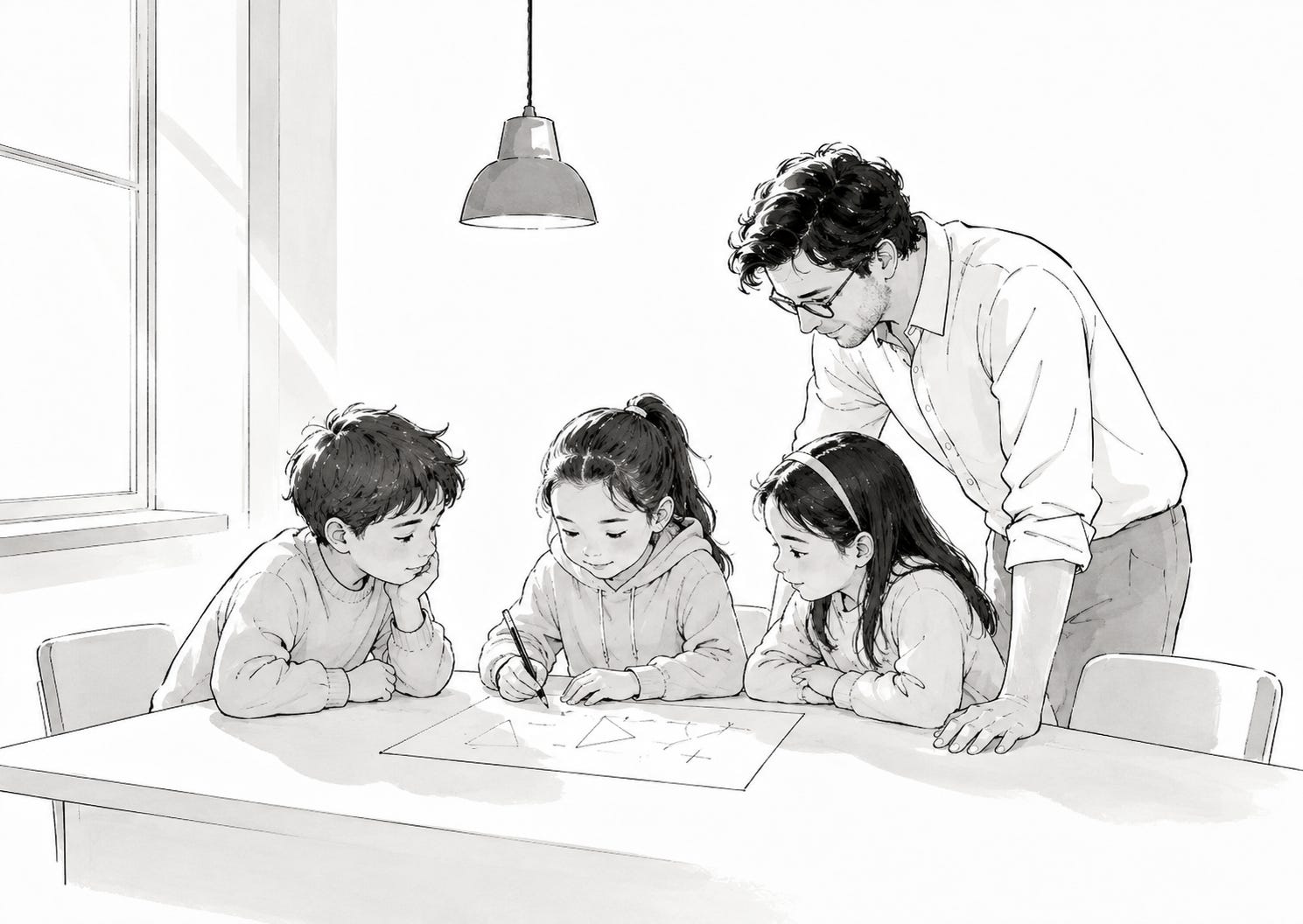
The classroom practices informed by the science of learning can contribute directly to the hygge surrounding intellectual challenge. A clear explanation protects students from avoidable confusion, a worked example gives them a secure place to begin, and guided practice allows them to attempt something difficult while support remains available. Checking for understanding ensures that uncertainty is noticed, while revisiting previous learning gives students repeated opportunities to experience knowledge becoming more secure.
The warmth within these practices comes from the teacher’s knowledge of their students and their response to what unfolds during the lesson. A teacher notices hesitation, adapts an explanation, gives somebody longer to think and treats an incorrect answer as useful information about what needs to happen next. Over time, these experiences help students understand that difficulty is an expected part of learning and that they will receive the teaching, time and practice needed to make progress.
Through my work in system leadership, I have seen how strongly the way an idea is introduced influences whether teachers feel able to engage with it. Leaders can help teachers connect the principles of learning science to familiar classroom experiences, examine what they might offer and raise genuine questions about their application. Respecting existing expertise, explaining the reasoning carefully and creating opportunities for professional discussion provide a stronger foundation for meaningful change.
Teachers also need permission to try manageable changes and consider what happens as a result. They might adapt the way they model a task, introduce a short retrieval routine, change the sequence of examples or check understanding more systematically before moving on. Looking together at the effect on students allows teachers to retain what helps, refine what remains uncertain and change their minds when classroom evidence gives them reason to do so.
Educational improvement becomes harder when every new idea is treated as a camp that people must either join or reject. Professional judgement develops through reading, discussion, experience and a willingness to reconsider what we think we know. Leaders can support this development by creating a culture in which uncertainty is acceptable, experimentation is purposeful and changing one’s mind is understood as part of learning.
The hygge of learning brings the intellectual and human dimensions of education into the same picture. The science helps us understand what learning asks of students and how teaching can make that challenge more manageable, while hygge draws our attention to the experience we create around the effort. Together, they offer classrooms that are ambitious, protective, carefully taught and full of the warmth, curiosity and connection that make learning a deeply human experience.
References
Education Endowment Foundation (2024) A School’s Guide to Implementation. London: Education Endowment Foundation. Available at: Education Endowment Foundation.
Kirschner, P.A., Sweller, J. and Clark, R.E. (2006) ‘Why minimal guidance during instruction does not work: An analysis of the failure of constructivist, discovery, problem-based, experiential and inquiry-based teaching’, Educational Psychologist, 41(2), pp. 75–86. Available at: Taylor & Francis.
Roediger, H.L. and Karpicke, J.D. (2006) ‘Test-enhanced learning: Taking memory tests improves long-term retention’, Psychological Science, 17(3), pp. 249–255. Available at: PubMed.
Rosenshine, B. (2012) ‘Principles of instruction: Research-based strategies that all teachers should know’, American Educator, 36(1), pp. 12–19 and 39. Available at: American Federation of Teachers.
Sweller, J., Ayres, P. and Kalyuga, S. (2011) Cognitive Load Theory. New York: Springer. Available at: Springer.
Wiking, M. (2016) The Little Book of Hygge: The Danish Way to Live Well. London: Penguin Life. Available at: Penguin.
Willingham, D.T. (2021) Why Don’t Students Like School? A Cognitive Scientist Answers Questions About How the Mind Works and What It Means for the Classroom. 2nd edn. San Francisco: Jossey-Bass. Available at: Wiley.
When delivering any PD for colleagues to assimilate, acquire and trial the strategy/technique needs to be placed into their context. Ideally linked specifically to the discipline, as well.
I agree that to foster innovation in classrooms requires what William calls a TLC (Teacher Learning Communities). There needs to be rigorous discussion between colleagues and evidence to identify what is/is not working.